Category: Web Design

  • Web Designing – A way to a bright future

    Web Designing – A way to a bright future

    What is web designing and its future scope?

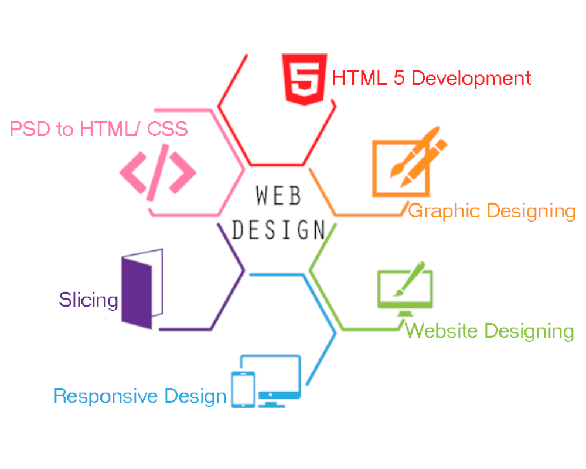
    Web Designing is not a new concept in today’s world. It has now become an integral part of IT industry. It is simply the planning and creation of responsive websites. The web designers use images, text, HTML5, responsive web design, bootstraps, CSS3, Photoshop and many more elements to create a web page. They mostly use the markup language like HTML for creating a structure and CSS for presentation.

    While choosing a career as a web designer few questions click to the mind like what is web designing? What is the job role of a web designer? What is the career perspective of this course? What are the areas that the course covers? and much more. Well, web designing has a great career prospect as it is an integral part of the industry and almost every company needs their web presence to promote their products or services through internet. However, one might not be sure as to how to become a web designer? Well, one can enroll in a short term course to learn modern web designing tools and programs and join the industry.

    The courses are of short duration which can last up to 3 months. In this short duration, the professional faculties train the candidates in Photoshop, JavaScript, Dreamweaver, HTML, CSS, Bootstrapping and so on which helps to create responsive websites. The candidates are trained on UI and UX based design styles. They are trained to implement cross browser compatibility on websites. To boost the confidence of the candidates, they are allotted with live projects where they have to make the practical application of tools and techniques that they have learned.

    Upon successful completion of the course, the students are required to clear a test after which they become a certified web designer. This certification helps them to bag a job in different industries like media, education, software industry etc. One can enroll in the course after completing the 12th standard.

    The designers are entitled to take big responsibility as they can create a good visual impact and user-friendly websites. So, give your career a boost with Web Designing Training at SKM Institute.

  • The difference between Web Development & Web Designing Training

    The difference between Web Development & Web Designing Training

    The term web development and web designing are very closely related to each other. However, technically both aspects are completely different. Candidates often misinterpret web development with web designing and vice versa. The outcome always results in confusion. Today we will help you to draw a line between web development and web designing training.

    What is Web Development?

    Web Development Company KolkataThe term Web Development is a process whereby a website is developed for the purpose of hosting via internet or intranet. The process includes coding and programming with a view to giving functions to a website. These functionalities are usually determined by the owner of the website. Some of the key activities in Web Development include- web page creation, configuring web-based applications on the website, integrating social media application and installing other desired functionalities such as payment gateway, SSL certification, etc. The aforesaid process runs on the following hierarchy-

    • Client-side coding
    • Server-side coding
    • Database Technology

    What is Web Designing?

    Web Designing Training KolkataWeb Designing is the process of improving the look and feel of the website. The term ‘designing’ signifies that the existing framework that has been built under web development is nurtured and improved. Candidates use technologies such as Adobe Photoshop, Adobe Dreamweaver, HTML 5, Bootstrap, etc., to give the existing framework an attractive and improved user interface. One of the key areas in web designing is responsive technology. The presence of this technology ensures that a website fits perfectly into any smart device like- desktop, laptop, smartphone, tablet, etc.

    So, before we sum it up, let’s take a look into web development & web designing training with an example. Suppose we want to build a house. Now, the process includes layers of the foundation, construction of pillars and floors would be a part of the development process. Once the primary task is fulfilled, then we move ahead to use stylish grills in the verandah, designer false ceiling and other objects that improve our lifestyle. This is the designing part. Similarly, while creating a website, we are first required to take care of the development and then move ahead with designing.

  • It’s RAINING jobs! Web Designing Course in Kolkata can help.

    It’s RAINING jobs! Web Designing Course in Kolkata can help.

    ust when you thought that companies from all over the globe were adopting cost-cutting means, there has been an exception in form of hiring Web Designing professionals. As per research, there has been a substantial increase in the demand of Web Designers. In India alone, Naukri.com suggests that there are 41,000+ jobs for professional website designers. Websites like Shine, LinkedIn and Indeed have also shown a significant demand by way of 4500+ , 6000+ and 9600+ jobs, respectively. Given the above statistics, it is obvious that Web Designing Course in Kolkata can help aspirants to build their career in the IT-Industry.

    How can Web Designing Course in Kolkata help?

    Kolkata is one of the lesser-known IT-hubs in India. But this doesn’t mean that the place lacks talent. There are numerous job-oriented training centers, including Karmick Institute, that offer state-of-the-infrastructure and necessary guidance from industry experts to help young candidates to find a good job. The journey starts from training and ends with 100% Placement Assistance. One of the most attractive areas of the training program is that it offers you to work on real time international projects and certification.

    Future of Web Designers

    Best Web Designing Course KolkataWe are all aware of the fact that the internet has become an integral part of every business/ organization/ individual. This has increased the demand for websites on a rapid scale. However, the industry is currently facing a shortage of professionals. Aspirants can take this opportunity to create a doorway for themselves. The course duration of Web Designing Course in Kolkata is around 3 months only. Like in every job, with every passing year candidates would be entitled to salary hike as well as better career opportunities.

    The Journey

    After having completed the Web Designing Course in Kolkata, candidates would be awarded a certificate along with placement assistance. The journey from being an unemployed person to an IT professional takes only 3 months!

  • 4 Common Mistakes that Amateur Web Designers Make

    4 Common Mistakes that Amateur Web Designers Make

    In comparison to the earlier times when having a website was a luxury and the design was of least concern; things are now vastly different. Fierce competition in each industry segment makes websites an indispensable tool for branding and marketing. Therefore, most businesses hire professional designers to design or re-design their existing website.

    With a skyrocketing increase in the number of internet users, the demand for skilled web designers has also surged. If you are an amateur web designer willing to undergo a web designing course, you need to introspect on your common mistakes, while designing a website.

    1. Use of lousy images

    Nothing can be worse than the use of poor images in a website. Such images just break your design and make it look like an unattractive one at the very first glance. Lousy images include the following ones:

    • Poorly photoshopped images
    • Low-pixel images
    • Too much lens flare
    • With red-eye reflections
    • With busy backgrounds
    • Blurred images

    Experienced web designers keep themselves away from such a practice by using high-quality images shot by professional photographers.

    2. Overuse of animation

    Yes, animation undoubtedly catches the imagination but looks best, when is used with restraint. While animation should be to delight the visitor, amateur designers kill the experience in their excitement to make the most of the art. As a result, they not only end up annoying the visitor but also lead to poor user engagement.

    3. Too many icons for call to action

    Including clickable calls-to-action (CTA) in a website design is now a standard procedure. However, using too many hamper the conversion process as it rather confuses a prospective lead. The golden rule is to stick to provide a single CTA on the home page and if you want to include one more, make sure it is not competing with the primary one.

    4. No use of alt tags for images

    Alt tags or alt attributes are extremely vital, and yet most amateur designers ignore the same for reasons unknown. It is essential to understand that people use different browsers like Chrome, Mozilla or internet explorer to access the internet. Sometimes, images are not visible on every browser. In such case, alt tag saves the day as then the image description appear in place of the vacant space meant for the image. Furthermore, this practice makes the website search engine friendly.

    Now, that you know your mistakes, join SKM Institute, a reputed web designing institute to learn more.

  • 5 Biggest Benefits of Short-term Professional Courses

    5 Biggest Benefits of Short-term Professional Courses

    In a world which is evolving at a rapid pace, new territories of knowledge are being discovered every day, one cannot afford to stop learning. What was ‘a lot of information’ for yesterday might be ‘too little’ for tomorrow. No one wants to lag behind in terms of knowledge and expertise. It is the reason why Short-term Professional Courses are gaining popularity.

    These courses give you the opportunity to upgrade your skills in only a small span of time.

    So let us start with the 5 biggest Benefits of Short-term Professional Courses:

    1. Reap Long-term Benefits

    These courses focus on backing up your knowledge with the relevant skills. They fill out the knowledge gaps you have and help you stay ahead of the curve. Not only does it help you get a rewarding job but a rewarding & fulfilling career.

    2. Enhance your Career

    Sharpening your skills with short-term courses help you get a competitive edge in the workplace. It showcases your willingness to compete, develop and learn. It is something that every employer looks for in its employees. It’s needless to say that it makes you an indispensable resource for any organization.

    3. Grow in your Interest Zone

    There can be something which you are really interested in but never got a chance to do anything with it. Short-term courses help you explore and be really good at things which interests you. These courses are loaded with practical trainings and projects which help you learn by doing and not just reading. For example, there are many people who chose Web Designing course out of interest and now they have made successful careers out of it.

    4. Balance your Lifestyle

    Short-term courses are ideal choices for those who would like to study whilst maintaining their career and income. The flexibility allows them to learn without disrupting their work-life balance. These courses are customized as per your requirements, whether you are a student or a working professional.

    5. Easy on your Pocket

    The Short-term professional courses are relatively cheaper than the full-time courses. This makes it an excellent option for people who cannot invest huge amounts of money but want high quality training and education.

    With the advent and growth of the Digital industry, it has become imperative to keep yourself updated with the latest streams of knowledge. People skilled in the field of App DevelopmentWeb DesigningDigital Marketing, etc. are in high demand and the demand is only going up.

    We have a wide range Short-term Job Oriented Courses which are designed to boost your skills and make you a hot shot in the job field.

    So get prepared for your future!

  • What Is The Difference Between UX And UI Design?

    What Is The Difference Between UX And UI Design?

    Today, UX designers are facing a dilemma. Employers expect them to possess UI skills as well. With every passing day, the demand is growing. According to some surveys, 66% of all UX jobs listed also ask for UI skills. Whether it be a small start-up or a large multinational company, the trend remains the same.

    So, it is quite clear that possessing proficient knowledge on both the domains gives an individual enviable edge when it comes to the job market.

    UX is not UI

    User experience design or UX tries to address the needs and requirements of a client. Once the requirement has been frozen, a workable framework is drawn to address the issue. This framework is then tested. Once both the value proposition and the business model has been validated, the product is built.

    User Interface Design may be looked upon as the combination of visual and interaction design. Visual design may be likened to the personality of a site – its look and feel. It is the very essence of the brand. Interaction design is the way people will interact with the site. For instance, when someone clicks on a button at the site, does it modify itself so as to make the user know that the click has been successful?

    Both UI and UX designers design interactions. The UX designers look at the holistic picture. The UI designers take care of the details.

    A UX designer is in charge of designing user flows. For example, what are the steps that a visitor will take to sign up for a newsletter? How will they know if they have been successful in signing up for the letter?

    Once the design is complete, it is then given to the UI designer. The latter accentuates the simplistic design of the UX designer to embellish it with colorful clues and colors to make it very easy for the visitor to navigate into successfully signing up for the newsletter.

    What is User Experience Design?

    User Experience Design (UED or UXD) is the process of enhancing loyalty and customer satisfaction by improving the pleasure, usability, and ease of use between the product and the customer.

    User Experience Design includes all interactions between a company and a customer. The use of this term since the very beginning has been almost completely within the digital field. One of the major reasons why this is so being because the industry began to explode at around the time this term was invented. Another important reason why this term became so popular is that it is synonymous with market research.

    Having said that, UX is not the same as Market Research. They merely adopt similar techniques in their execution – the optimisation, analysis, and structure of a company’s products and its interaction with the customer.

    The UX role is a part project manager, part designer, and part marketer. It is a multifaceted, challenging and complex role. In the end, the intention is to connect the user’s requirements with the business goals through a process of refinement and testing that lives up to the expectations of both sides of a partnership.

    UX design is the process of improvement and development of good interaction between the company and the user. It is responsible for the processes of prototyping, research, content, development, and testing. In theory, UX design is non-digital but it is primarily used in the digital industry.

    User experience deals with sociology, great products, people and cognitive science.

    What is UI Design?

    User Interface Design is the interactivity and presentation of the product. This profession is often interpreted in terms of graphic design, branding design, and front-end development. Its descriptions are similar to User Experience design as they often use similar structural techniques.

    UI design is a challenging and multi-faceted role. It is responsible for a product’s development, layout, content, and research transforming into a responsive, attractive and guiding experience for users. It is a purely digital profession.

    The UI designer’s role is interactive and visual. The responsibility of the implementation of the design lies with the developer.

    UI designers are responsible for the transfer of a brand’s assets online to create a better user experience. It visually guides a user through a product’s interface. It is a purely digital field.

    Difference between UI and UX

    It is important to know the difference between UI and UX even though UI is an integral part of the design. As an example, let us consider a website that does movie reviews. Even if the UI of the website is perfect, the UX of users will not be good if they are searching for an independent movie made on a small budget but the website only harbors information on big-budget movies made by large studios.

    Another good example is Google. It has a very simple UI. Its UI comprises of a logo, a search results page, a few buttons and a search bar. However, when we type something into the search box, we instantly gain access to an abundance of human knowledge at our fingertips in less than a second. If however, instead of delivering what we are looking for within a second, Google took more than 15 seconds to come up with the results, our UX with Google would be substantially poorer.

    User v Product

    UX design is concerned with anything that solves a problem within the user’s journey. UI design is concerned with how a product looks and feels online. UI is only a part of the journey. A very apt analogy that very correctly describes the difference between UI and UX is the restaurant analogy. UI is the utensils, table, glass, plate, and chair. UX includes the food, music, service, lighting, and parking.

    Concept v tangible design

    People often mistake the definition of a UI and UX designer. A layperson might think that if one designs the UI and people experience a product through the UI then that makes the UI designer also a UX professional. This is flawed logic. It is comparable to saying that individuals who design their own homes are architects and people who mend the taps at their homes are plumbers.

    The term UX designer refers to a set of skills that have been honed within the industry over a period of 20 years. A UX designer is responsible for the conceptual part of the design process. The UI designer is responsible for the tangible elements.

    A UX designer is skilled in strategy, interaction design, information architecture and research. The UI designer is skilled in interaction design, brand, motion design and information design.

    Design v experience

    User experience design is about the complete experience which may or may not have anything to do with the screen. UI design is about information design and visual design around screens.

    UX refers to any touch point that a customer or a user has with a system whether digital or otherwise.

  • Why You Should Learn Bootstrap As A Web Designer

    Why You Should Learn Bootstrap As A Web Designer

    Merely writing code and establishing a website on the internet is not enough. If you are trying to entice your potential customers into visiting your portal and convert into paying customers, your website has to be visually and aesthetically appealing. It also has to be user-friendly and have utility. This is the job of web designers.

    Today, web designers are every bit as much in demand as developers. Skilled and competent designers command lucrative packages across blue chip companies and are hugely sought after by headhunters.

    In this blog, we will explore why learning Bootstrap will help establish your career as a web designer.

    Easy to use

    If you are familiar with CSS pre-processing, Bootstrap allows you to work with LESS files. Having said that, if you have never used it before or are unwilling to use it now, Bootstrap provides plain CSS files also. If you are looking to use plain CSS files, you can readily download the same from the Bootstrap website. To use them, all you need to do is to include them in the head of your HTML files after unzipping them. This will enable you to access the entire framework. You can now use the bootstrap classes that are predefined with the markup. Please remember – before you can convert your designs to markup, make sure that your designs are using the default framework grid.

    Strong support from an online community

    Bootstrap is hosted on Github as an open source project. As such, it boasts of a large community that extends support and is updated on a regular basis. There are hundreds, if not thousands, of contributors who have already made tens of thousands of posts. The queries that have already been successfully answered are also hosted on a blog. One of the biggest advantages of Bootstrap is that even if you are not proficient with CSS or HTML you will still be able to use it to develop web apps with it. In addition to being one of the best frameworks available right now, many of its UI Editors such as LayoutIt!, BootUI, Jetstrap, Divshot, and PaintStrap are available online for free.

    Customizable

    There are plenty of ways to customize the default design of Bootstrap. In fact, all of its default Javascript and CSS behavior can be overridden. Bootstrap also allows SASS customization if you are a SASS developer. With the help of Bootstrap, you can use the SASS options to easily create a new template.

    Compatible with browsers

    Bootstrap is compatible with the stable and latest releases of all major platforms and browsers. For example, in case of Windows, Bootstrap works with Microsoft Edge and the versions 10 and 11 of Internet Explorer. With the help of Bootstrap, you can develop a website that will work on any browser.

    One of the best responsive web design frameworks out there

    Responsive web design or RWD may be defined as optimizing the design of a website in such fashion so as to make its layout appealing and user-friendly across multiple screen sizes and devices such as a smartphone, desktop, tablet or laptop.

    Some of the reasons why Bootstrap is one of the best frameworks to use for responsive web design are –

    • Within the framework, you can reuse the code to avoid repetition.
    • Use grid options that are responsive and pre-built in order to utilize the responsive design concepts to the fullest.
    • Use a starter theme to prototype designs within a time frame.
    • Bootstrap allows for consistency within a project even if multiple developers are working on the same.

    With a plethora of benefits to its name, Bootstrap is not only one of the most popular frameworks in use but is expected to explode in its universal appeal and application in the very near future. So, if you are looking for a bright career with Bootstrap, we recommend that you enroll yourself into an advanced web design course.